
Why Tuff Trays?
Hey there teachers, if there’s one thing we’ve learned over the years, it’s that meaningful learning doesn’t require elaborate setups, expensive materials, or endless prep time. Sometimes all it takes is open space, a few simple loose parts, and children who are ready to explore.
That’s exactly why we love tuff trays.
That big ole’ wide, shallow workspace that’s easy to move, easy to clean, and large enough for multiple children to gather around.
That alone makes them meaningful – they create community play.
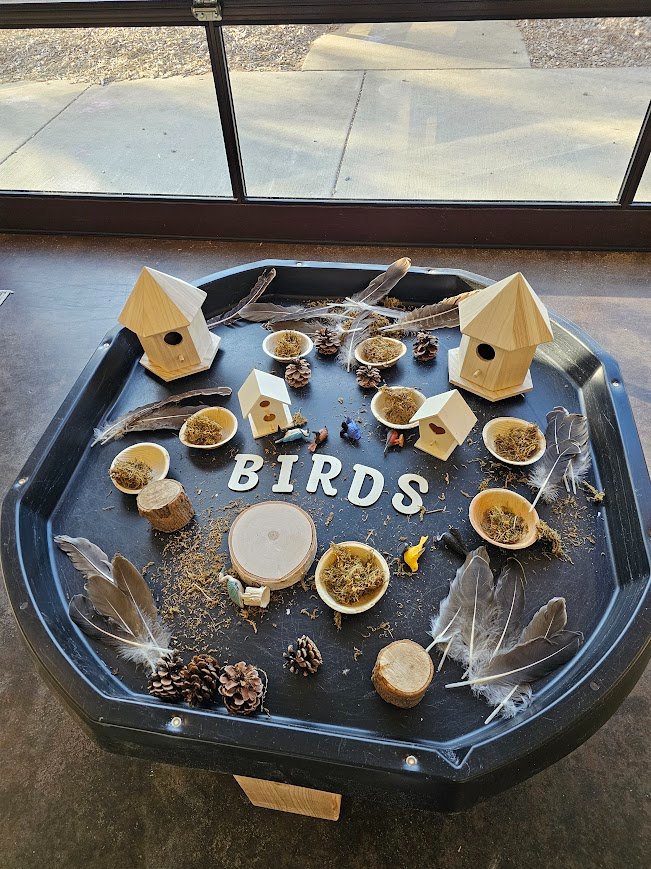
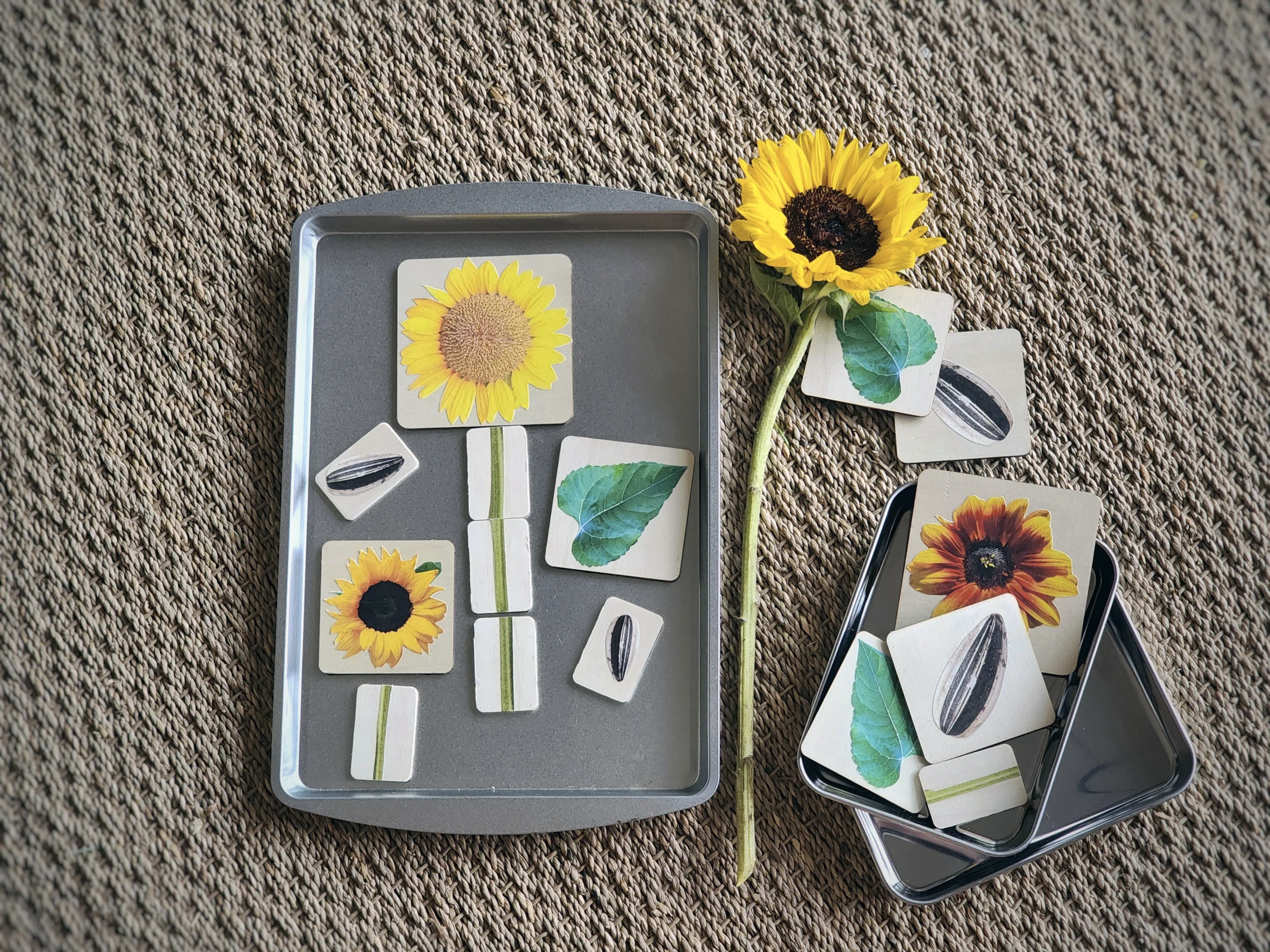
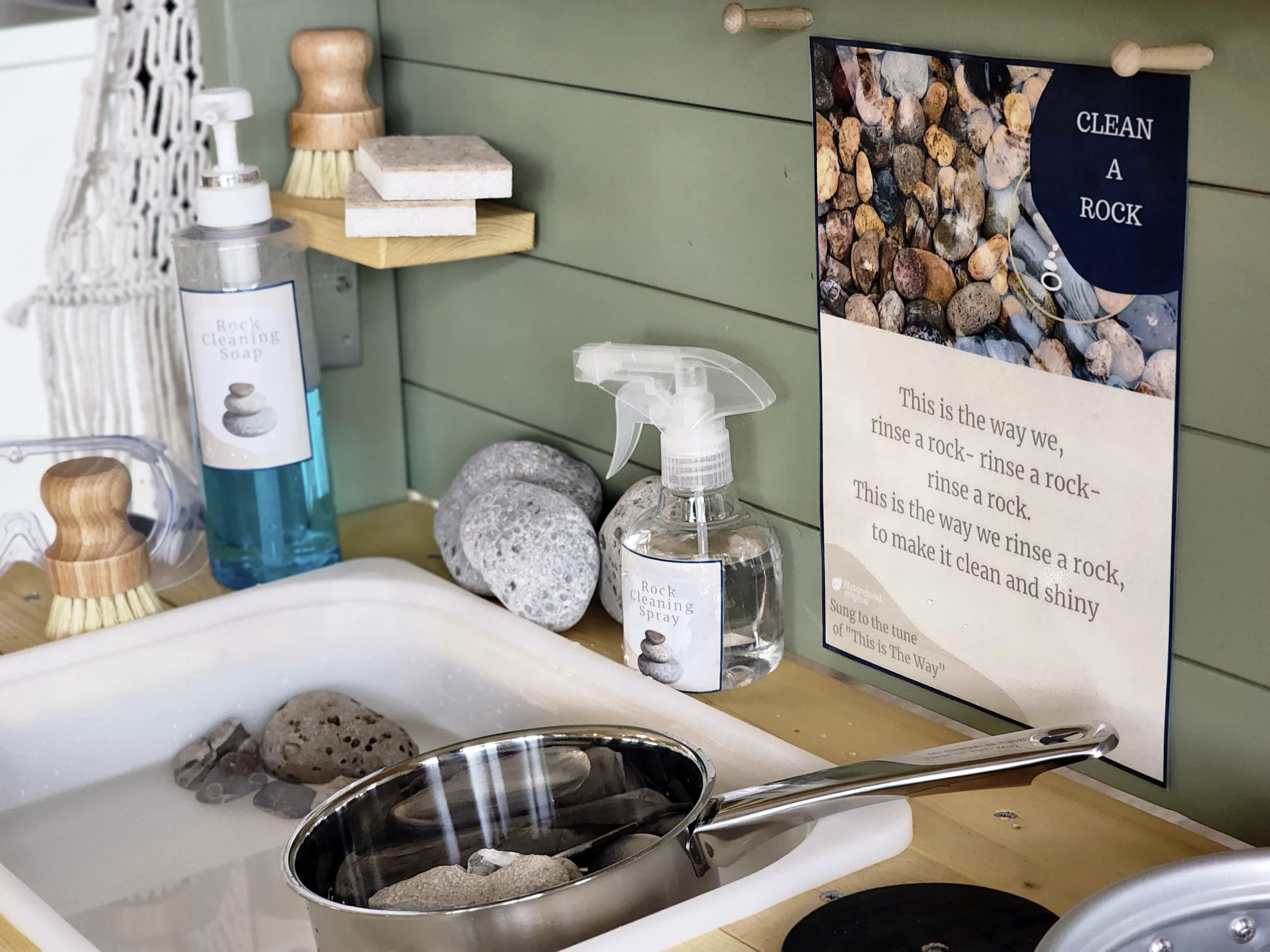
How attainable is it? When we say attainable, we also mean budget friendly. When putting together these playscapes we often use materials we have already in hand. If you take a short walk outside or open the recycling bin, you already have everything you need for a beautiful, meaningful play invitation. Examples could be:
- Pinecones
- Leaves
- Flowers
- Sticks
- Feathers
- Soil or sand
- Recycled items like egg cartons, cups, lids, scoops, cardboard
- A few toys or tools you already keep on your shelves
There’s no “right” way to do it — you scatter the materials, offer tools for pouring or scooping, and the tray instantly becomes a learning space children are drawn to. For teachers juggling transitions, routines, and the unpredictability of early childhood, this ease matters. It keeps these opportunities sustainable or one of our favorite words again, attainable.
Okay but really, one of our favorite play materials is just a gob of loose parts. Tuff trays were made for loose parts.
Their open layout lets children move materials freely, compare textures, build small worlds, or create repeating patterns. Just think about it, bark with real ridges, leaves that crumble or bend, pinecones that open and close, stones that are smooth or rough, soil that packs or crumbles
…they’re exploring science concepts in the most authentic way possible.
They’re not “playing with materials.” They’re learning from the natural world itself.
So now we are having fun playing and at that that same time helping support this vast range of developmental areas without feeling like work to these little learners. Check out this list we compiled below, it is a quick peak to help guide your developmental indicators.
Cognitive & STEM
- Testing ideas
- Experimenting with cuase and effect
- Classifying, coparing, building
- Early engineering and problem-solving
Fine Motor
- Pinching
- Experimenting with cuase and effect
- Classifying, coparing, building
- Early engineering and problem-solving
Language
- Sharing ideas with peers
- Describing textures and actions
- Storytelling through small worlds
Social-Emotional
- Taking turns
- Negotiating space
- Collaborating
- Managing frustration
- Experiencing joy together
Nature Connection
- Handling real materials
- Observing change
- Asking questions
- Caring for living things
This is what makes tuff trays so special — the learning isn’t forced.
It emerges naturally through exploration.
Something you can set up quickly and trust will lead to rich, open-ended learning.
And you can start with whatever you already have.
Subscribe To Our Newsletter
Subscribe for your email and get 10% off your first order!

COPYRIGHT 2025 © NATUREHOOD BY MILESTONES. ALL RIGHTS RESERVED.